
In addition to its negative effects on smokers themselves, smoking can also harm their loved ones at home, at work or during leisure activities. Passive smoking, imposed on those near smokers, damages their health.
Environmental tobacco smoke contains carcinogens and exposure carries serious health risks. No safe level of exposure has been established. This does not mean that each individual encounter inevitably causes cancer in every person who is exposed.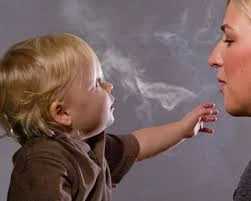
More Specifically:
- People who live and work with smokers more frequently develop respiratory and heart problems. Their risk of developing cancer is also higher.
- Babies born to mothers who smoked are often premature, have a lower birth weight, experience problems in the development of mental functions and have higher perinatal mortality.
- Infants who breathe smoke-contaminated air are at greater risk of sudden infant death syndrome and have more frequent respiratory problems.
- Children who live in smoke-filled environments, with parents who smoke in front of them, are more likely to have frequent respiratory infections and asthma attacks.
Protect the health of the people you love and quit smoking!
Secondhand smoke in shared spaces
Discussion of smoke includes the surroundings of people who do not smoke. Place and time of exposure are useful details to describe.
Smoke exposure also concerns people who do not smoke themselves. Describing conditions at home and in shared spaces makes discussion of protecting others more concrete. One person’s cigarette count does not fully describe the exposure of everyone nearby.
Explore Smoking Cessation and Supportive Methods or read how Medical Acupuncture Methods is presented at Satory.
Shared air means shared exposure
Secondhand smoke is not limited to the visible stream leaving a cigarette. It concerns the air shared by people in the same environment. Someone can therefore be exposed without holding a tobacco product or choosing to be near smoke. At home, at work and during travel, prevention works best with an understandable rule that applies to everybody. This allows people to organise their surroundings rather than negotiate how much unwanted smoke they should tolerate.
The absence of a safe exposure level does not mean every single encounter inevitably causes cancer. It means an amount of smoke cannot be recommended as harmless. A risk statement and a prediction that a particular person will become ill are different things. Keeping that distinction clear helps prevent both complacency and panic following an incident, while preserving the reason for reducing exposure and creating environments where people can breathe without tobacco smoke.
A practical home and car rule
An open window, a fan or a separate room does not eliminate exposure inside an enclosed space. A clear household agreement is that nobody smokes inside the home or car, whether children are present at that moment or will enter later. Apply the same rule to visitors. A consistent arrangement avoids a new negotiation each time someone arrives and makes expectations easier to explain without judging an individual’s character or previous efforts to quit.
Before a visit, it can help to explain that indoor areas remain smoke free. If a host or guest smokes, arrange an outdoor location away from openings and people waiting or playing nearby. Shared housing may also require discussion when smoke moves between spaces. Courtesy and firm boundaries can coexist. The practical issue is the air entering a shared environment, rather than whether someone feels personally offended by a request to smoke somewhere else.
Children and people needing protection
Children depend on adults’ decisions about the air they breathe. Questions about exposure should therefore include anybody who looks after, transports or hosts them, rather than only their parents. Tell the treating clinician about possible exposure when a child has asthma or repeated respiratory problems. Removing tobacco smoke supports appropriate assessment and treatment. It does not establish the cause of every cough, and it should not be used as a reason to change prescribed treatment independently.
During pregnancy, discuss the pregnant person’s own smoking separately from exposure caused by other people. Both belong in a medical history, but they should not be merged into one undifferentiated statement about every possible pregnancy risk. A supportive discussion makes it easier to describe actual conditions at home and work. The aim is to identify changes that can be made, including situations where another household member needs support to stop smoking as well.
Supporting a smoker while protecting others
A smoke free indoor environment can begin before a quit attempt is completed. Other people do not have to wait until a smoker feels completely ready. At the same time, practical help, such as arranging a suitable appointment together or avoiding offers of cigarettes, may be more useful than repeated comments about willpower. Ask what support is welcome, and keep the household air rule clear even when the person’s progress varies or the attempt needs adjustment.
If you smoke, consider an organised discussion about preparing to stop. Ask about behavioural and medication support, follow up and cost. If you do not smoke but are exposed, record where and when it happens so that changes can be discussed specifically. The shared goal is practical: smoke free indoor air, less unwanted exposure and access to appropriate help for anybody finding it difficult to stop their tobacco use or maintain their chosen quit plan.
Sources for further information
Smoke exposure in everyday settings
Why include the home and car in the discussion?
People share air and spend time together in these spaces. Describing exposure needs to include these everyday circumstances.
Is secondhand smoke exposure limited to leisure venues?
No. Exposure can occur at home, in cars, at work or in social settings. The discussion should include the places where someone spends time, not only whether that person smokes.