
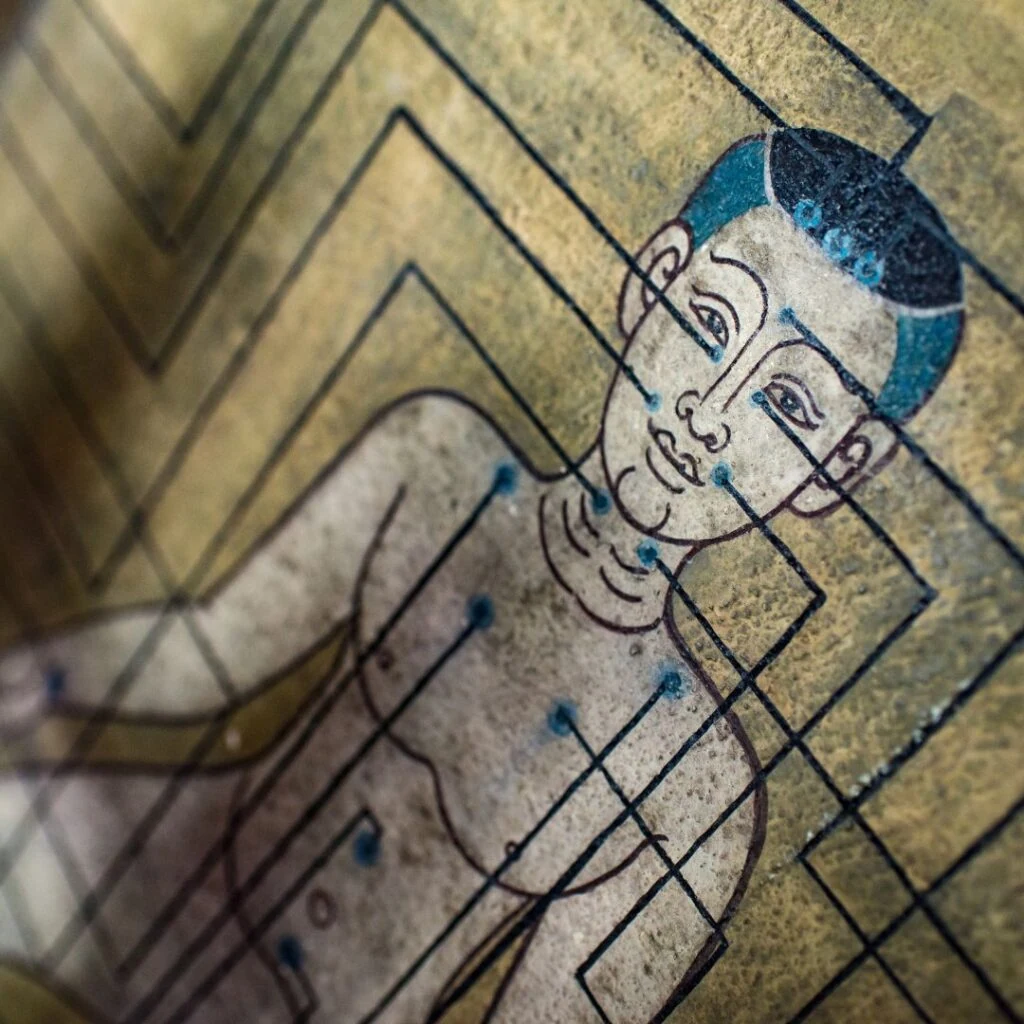
How does acupuncture work on pain, and can a needle prick really relieve severe pain? Medical research has established that acupuncture has a significant effect in relieving headaches and migraines, reducing chronic pain and even providing pain relief during childbirth. In addition, a randomised study in emergency cases showed that acupuncture relieved acute pain more quickly and effectively than intravenous morphine, with fewer side effects.
Advances in imaging and clinical research reveal how a needle prick can trigger a chain reaction within the body, activating immune cells, releasing chemicals that modify pain and altering brain activity. Consequently, it is now clear that acupuncture is an appropriate, non-addictive treatment for pain management worldwide.
How Acupuncture Relieves Pain: The Mechanism of Action
The response begins locally as soon as the needle is inserted. Mechanotransduction, the mechanical pulling action of the needle, triggers a sequence of biochemical signals in the surrounding connective tissue. This activity prompts mast cells in the skin, the body’s first line of defence, to release histamine, serotonin and adenosine into the tissue. These signals then stimulate nerve endings, sending messages to brain regions involved in processing and regulating pain.
Other mechanisms, such as ‘pain inhibits pain’, may also form part of the mechanisms through which acupuncture relieves pain.
Acupuncture Under the Microscope: What Modern Imaging Shows
The latest advances in imaging have made the once-unknown effects of acupuncture increasingly visible. High-field functional magnetic resonance imaging (fMRI) shows how needle stimulation at specific acupuncture points is associated with changes in brain activity, including regions involved in pain processing and emotional regulation.
At the same time, soft X-ray imaging has recorded immune cells moving towards acupuncture needles, where they release pain mediators. Even ultrasound helps researchers observe, in real time, the ripple effect of pulling a needle and how these effects may differ according to its placement.
Overall, these discoveries are beginning to outline how a localised stimulus can spread throughout the body, linking peripheral tissue, immune responses and pain-processing networks in the brain. At a psychological level, simply anticipating the therapeutic effect also plays a role. ‘Expectation and belief in the treatment, partly through the brain’s reward circuits, can also contribute to the pain relief achieved with acupuncture.’
Studies have also explored how traditional acupuncture maps correspond to anatomy. Researchers have documented an 80% overlap between classical meridian pathways and connective tissue networks, in areas that appear to contain a higher density of nerve fibres than surrounding areas.
Does Acupuncture Work Beyond the Placebo Effect?
An article recently published in the Journal of Pain showed that both real and sham acupuncture work and can provide relief, just not equally. Longer-lasting relief, of up to 12 weeks, was reported with real acupuncture, while relief from the placebo effect declined after a few weeks.
Real acupuncture creates a micro-injury that releases numerous chemicals. The central nervous system therefore activates the body’s natural long-term repair mechanisms.
If persistent pain is troubling you, read more about acupuncture for chronic pain and about medical acupuncture at the Satory practice.
Frequently Asked Questions About Acupuncture and Pain
How does acupuncture relieve pain?
Inserting the needle triggers a local sequence of biochemical signals in connective tissue. Mast cells in the skin release histamine, serotonin and adenosine; nerve endings are stimulated and send messages to the brain regions that process and regulate pain.
What do imaging studies show about acupuncture?
Functional magnetic resonance imaging (fMRI) links stimulation of specific acupuncture points with changes in brain activity. Soft X-ray imaging has recorded immune cells moving towards the needles, while ultrasound shows the needle’s effect on tissue in real time.
Is the effect of acupuncture simply a placebo?
According to a study in the Journal of Pain, both real and sham acupuncture provide relief, but not equally. Relief from the placebo effect declined after a few weeks, while relief with real acupuncture lasted longer.
How long does pain relief last after acupuncture?
The Journal of Pain study reported relief lasting up to 12 weeks with real acupuncture. Duration varies according to the condition and the individual patient, so the treatment plan is determined by the physician after assessment.
References
- Schlaeger J, Steffen A, Takakura N. Long-lasting effect of penetrating acupuncture among responders: Double-blind RCT of acupuncture for vulvodynia. The Journal of Pain, 2025; 38.
- Takakura N, Takayama M, Kawase A, Kaptchuk TJ, Kong J, Vangel M, Yajima H. Acupuncture for Japanese Katakori (Chronic Neck Pain): A Randomized Placebo-Controlled Double-Blind Study. Medicina (Kaunas). 2023 Dec 9;59(12):2141.
- Koog YH, Jung WY. Time Course of Placebo Effect of Acupuncture on Pain: A Systematic Review. ISRN Pain. 2012 Nov 28;2013:204108.
Acupuncture and pain mechanisms
Studying a neural response addresses a different question from following a patient’s everyday function.
For a description of the method, see Medical Acupuncture Methods. Related reading: Chronic Pain and Complementary Management.
Understanding pain and treatment goals
Can an imaging result predict pain relief?
A recorded brain response does not by itself predict the amount or duration of relief. Clinical evidence must address the particular condition and application.
What information helps a clinician assess pain?
Location, duration, intensity and effects on movement or sleep provide different information. Previous injuries, investigations and treatments already tried also help frame the discussion.