
Acne is one of the most common skin problems, affecting almost all adolescents to some degree, but it can also continue into adulthood.
Acne involves blocked hair follicles and inflammation. Hormonal changes, certain medicines and products that clog pores can contribute. It is not caused by poor hygiene, and aggressive cleansing can irritate the skin. A history helps distinguish possible contributing factors from assumptions about personal habits.
Acne in Chinese Medicine
Traditional Chinese medicine describes acne using concepts such as “heat” and “moisture” in relation to traditional functional systems. These are historical explanatory terms. They do not establish a diagnosis of lung, stomach or spleen disease and should not be interpreted as laboratory or dermatological findings.
Possible neurobiological and anti-inflammatory mechanisms of acupuncture are being investigated. Studying a mechanism does not by itself establish effectiveness for acne. Clinical findings need to be considered alongside the quality of the studies, their comparison groups and the duration of follow-up.
Management of a skin flare is guided by diagnosis and individual history. If acupuncture is considered as a complementary option, suitability and appointment frequency require individual review. There is no established universal session schedule for everyone with acne. Herbs and essential oils should not be added automatically: possible irritation, allergies and interactions need consideration with the treating clinician.
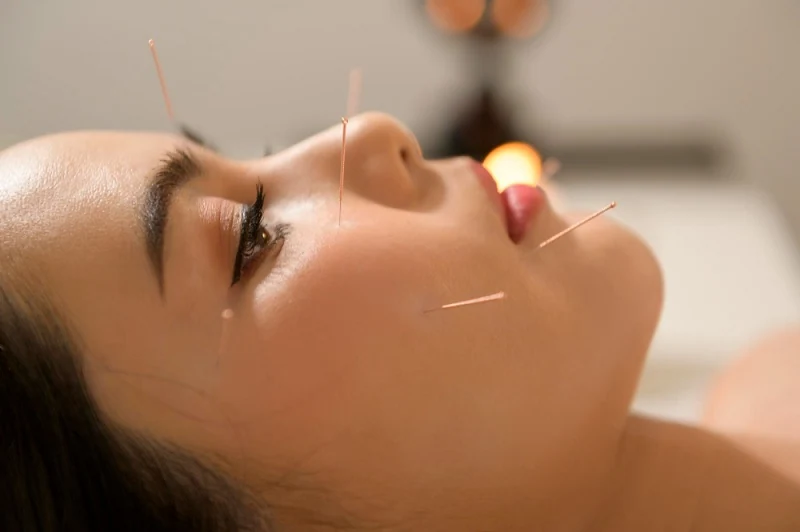
Topics investigated in research, rather than guaranteed individual benefits:
- Changes in skin lesion severity and inflammation.
- Possible biological mechanisms, which do not establish a proven clinical benefit.
- Adverse effects, persistence of any improvement and the quality of the available evidence.
References
- Chun-Yan C, Guang-Yao X, Yan-Yan S, Ming-Shu X, Peng L. Acupuncture: A therapeutic approach against acne. J Cosmet Dermatol. 2021 Dec;20(12):3829-3838. doi: 10.1111/jocd.14487.
- Mansu SSY, Liang H, Parker S, Coyle ME, Wang K, Zhang AL, Guo X, Lu C, Xue CCL. Acupuncture for Acne Vulgaris: A Systematic Review and Meta-Analysis. Evid Based Complement Alternat Med. 2018 Mar 12;2018:4806734
Acne and acupuncture: an overview
The traditional description of acne in this article is an explanatory framework, rather than a substitute for dermatological diagnosis.
Continue with Medical Acupuncture Methods, or browse Skin Conditions and Skin Care for related articles.
Acne diagnosis and assessment of severity
Acne diagnosis brings together the appearance of the lesions and the person's history. A dermatologist considers the types of spots, their distribution and any scarring, alongside when the problem began and how it has changed. Facial photographs may not show the whole picture, because the back and chest can also be affected. Pain, sensitivity and the effect on confidence or daily activities deserve discussion even when the visible area appears relatively small. These details help establish what needs attention first.
Before a consultation, prepare a short record of skincare products and treatments already tried. Include their names, how long they were used and why they were stopped. Irritation from one preparation does not mean that every treatment will have the same effect. Mention medicines, relevant changes in menstrual patterns and other accompanying symptoms. The clinician can decide whether further investigation is appropriate; the same blood tests are not necessary for everyone who develops acne. Bring existing results rather than arranging tests solely on the basis of an online article.
Treatment choices and complementary acupuncture
Treatment is selected according to severity, risk of scarring and individual circumstances. Options can include topical preparations or medicines that require medical supervision. Considering acupuncture as a complementary intervention should not delay dermatological care, especially for deep painful lesions, developing scars or substantial emotional distress. If prescribed treatment is difficult to tolerate, discuss the difficulty with the clinician responsible rather than stopping or replacing it without advice. A review can distinguish an unsuitable preparation from a plan that needs a different approach.
The references listed in this article need to be read with their limitations in mind. The 2018 systematic review reported generally low methodological quality in the included trials. Possible benefit in selected study participants does not establish reliable results for every form of acne or guarantee prevention of scarring. If complementary acupuncture is considered, agree on the intended goal, how changes will be recorded and when the decision to continue will be reviewed. The discussion should include uncertainty as well as practical arrangements, so that expectations remain realistic throughout the process.
A simple record can track flare patterns, product tolerance and changes in treatment. Photographs are easier to compare when lighting and camera position are similar and filters are avoided. Changing several products at once without guidance can make it difficult to identify what helped or irritated the skin. Gentle skincare and avoiding squeezing lesions are separate from the mistaken idea that acne reflects inadequate cleanliness. Persistent symptoms should prompt reassessment rather than increasingly harsh cleansing or repeated unplanned additions to the routine.
Cost, prices and planning a consultation
The cost of care depends on the services that are actually appropriate. Before agreeing to complementary treatment at Satory, clarify the charge for the initial assessment, the price per session and whether review appointments have a separate fee. A fixed total programme cannot be assumed to suit every person with acne. Ask what the proposed service includes and how decisions about further appointments will be made. This makes it easier to consider time commitments alongside existing dermatological care and any related expenses.
Useful questions include which change would count as meaningful progress, when continuation will be discussed and what happens if there is no improvement. Price alone cannot establish whether an intervention is suitable for a particular skin condition. The overview of medical acupuncture methods provides further context for preparing questions. A clear written outline of the proposed approach helps distinguish the assessment, any optional complementary sessions and the ongoing treatment being supervised by the dermatologist.
Sources for further information
Skin concerns and realistic expectations
Are “heat” and “dampness” dermatological diagnoses?
In this text they belong to a traditional Chinese explanatory framework. They are not laboratory findings and do not replace assessment of the skin lesions.
What should I mention before discussing complementary skin care?
Mention any established diagnosis, the pattern of flare-ups, medicines and skin products used, and any allergies. These details support a more specific discussion with the dermatologist.