
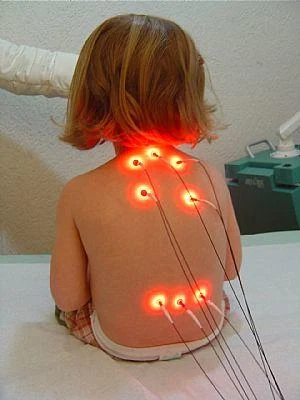
Photobiomodulation uses low-power visible or near-infrared light and is studied for its effects on cellular processes. This description does not in itself demonstrate clinical benefit for a specific condition.
Interpreting photobiomodulation requires wavelength, power, dose, exposure time, tissue and clinical indication to be specified. Broad terms such as self-healing or detoxification do not constitute outcome measurements.
Context for the description and embedded video
The publication presents a brief description of the mode of action of EY-LLLT and a video. The broad claims about its mechanism are not accompanied by sources or technical parameters, so they should be read as a general description rather than as evidence of effectiveness or personalised guidance.
Read a mechanism presentation in stages
A presentation using arrows, cells or video can organise an idea. It is not a clinical trial and does not establish that every stage occurs identically in everyone. Distinguish observations, hypotheses and clinical conclusions. Where references are missing, the account should remain general information. The clarity of an illustration or ease of understanding does not independently strengthen the evidence. A visually convincing explanation still needs support for each claim that is used to justify an intervention.
The embedded video complements the written presentation, but watching it does not provide personal treatment instructions. Device names and general descriptions of cellular processes cannot determine safe settings or duration. If a question arises, note the specific statement and ask for its scientific reference. Discussion can then concern a claim that can be checked rather than the overall impression created by the visual narrative. An informational appointment should allow time to resolve such questions before any course is agreed.
From the light source to the biological target
Explaining a mode of action requires the source, wavelength and intended tissue to be identified. Absorption and scattering affect light distribution. Energy at the surface is not necessarily energy at greater depth. Biological responses also depend on the state of the cell or tissue. A statement that light acts on the body is therefore too broad to explain a specific clinical use. Technical information becomes useful when it connects the application to the actual question being investigated.
Possible changes in mitochondrial function or cellular signals are studied using defined methods. They do not automatically mean self-healing of every organ. Even when an experimental mechanism is supported, it must be connected to a practical outcome in a relevant population. A molecular change and a person’s ability to move, sleep or recover are different measurements. Neither should be substituted for the other. Clinical interpretation requires knowing whether a plausible pathway produced a worthwhile result under appropriate comparisons.
Ask for concrete outcomes
Terms such as regeneration and activation sound positive but need a precise meaning in the study. Which tissue was examined, what changed and for how long? Was there comparison with simulated application or another treatment? Were adverse events recorded? These questions are more useful than a general list of biological advantages. Attention to methods supports accurate interpretation rather than obstructing information. It helps identify what a finding contributes and prevents a broad explanation from becoming an unsupported personal prediction.
External application, intranasal procedures and other routes of light delivery also need distinction. A shared abbreviation does not make them equivalent. Safety and effectiveness concern the actual application. Settings should not be copied from a video to another device, and an exposure that cannot be felt is not automatically harmless. Technical details matter when they support a real decision, rather than serving as impressive vocabulary without a clear connection to diagnosis, benefit or risk.
Discuss the proposed service
Ask exactly what is proposed, for which diagnosis, with what supporting evidence and how progress will be reviewed. Pricing should describe sessions and reassessment without implying that a mechanism explanation guarantees a result. Existing care and communication with the treating clinician continue. A video can open a discussion, while a decision requires history, a realistic goal and information about risks, uncertainty and options. If answers rely only on commercial descriptions, further clarification before committing to sessions is reasonable.
Sources for further information
EY-LLLT: describing mechanisms
References to photochemical processes introduce research questions. They do not establish the outcome of every light application.
The terms LLLT and photobiomodulation appear in publications addressing different questions. Before comparing descriptions, clarify where light is applied and for what purpose. External treatment, stimulation of acupuncture points and other research techniques are not automatically the same protocol.
A biological response and a clinical outcome represent different levels of evidence. A laboratory observation does not establish a benefit, session count or suitability for an individual. Device details, parameters, tissue and participant assessment help put a report in context.
The Laser Acupuncture page explains the method; LLLT acupuncture and low-level laser gathers related articles.
Frequently asked questions about this article
What does the original publication include?
It includes a brief description of EY-LLLT, an image and an embedded YouTube video. The video remains supplementary material for the publication.
Does the video constitute evidence of clinical effectiveness?
No. The presence of a video does not replace evidence from appropriate studies or an individualised medical assessment.
What technical information does the article not provide?
It does not specify wavelength, power or dose, duration and frequency of application, a specific indication or sources for the broad claims about its mechanism.
What must be clarified before application?
The exact device and parameters, the intended goal, contraindications, alternatives and suitability for the particular individual need to be established.