
Acupuncture has a long history and is now used in different clinical and complementary settings. Its spread does not establish universal effectiveness. Each application is assessed for the particular condition, intended aim and existing care.
Research investigates possible neural, local, immune and other responses to acupuncture. The mechanisms are not fully understood. Findings do not establish general balancing of the hormonal or immune system in every person. Clinical significance and duration are assessed for the condition and individual case, without guaranteeing medium- or long-term benefit.
Application requires assessment of medical history and possible risks by an appropriately trained professional. Contemporary research examines relationships between stimulation at particular sites and neural or local responses. It has not established that every point has unique electrical, chemical or metabolic properties determining an individual response. The technique and its selection require a specific clinical rationale.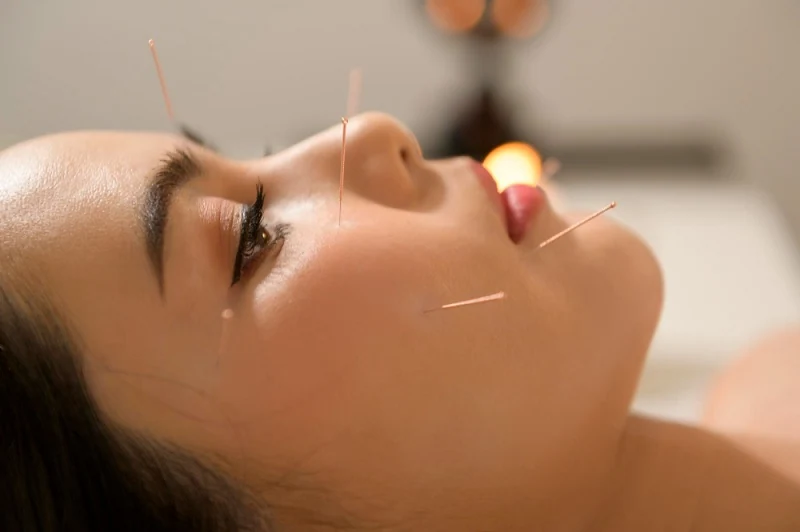
There are many different techniques which we select at the Satory centre according to the circumstances:
- electroacupuncture,
- auricular acupuncture (acupuncture at points on the pinna),
- abdominal acupuncture,
- Low-level light stimulation of acupuncture points without needle insertion. Suitability, safety and application parameters require individual assessment, especially for children or people afraid of needles.
Medical acupuncture: principles and care
Practical discussion begins with the person’s concern rather than one session schedule for everyone. Technique and reassessment relate to the goal.
Acupuncture history, traditional explanations and modern clinical research address different questions. An older reference shows how the method was described at a particular time. It is not by itself a current recommendation or evidence for every condition in a list.
The Medical Acupuncture Methods page explains the method; Medical articles and health information gathers related articles.
Assessment comes before a technique
Medical acupuncture is not the same procedure for every concern. An initial assessment needs to clarify the problem, whether a diagnosis exists and which care is already in place. Finding a tender point does not by itself explain its cause. History, examination and any appropriate investigations come before selecting a complementary intervention, particularly when symptoms are new, changing or have not yet been assessed.
Useful details include symptom duration, aggravating factors and activities that have become difficult. A medicine list and previous investigation results can provide context. There is no need to adapt the account to a theory about energy or balance. Describing everyday experience gives a clearer starting point for a specific goal, such as improving one activity, rather than a general promise to restore the whole body.
Different methods are not interchangeable
Conventional acupuncture, electroacupuncture, auricular acupuncture and stimulation with light involve different delivery methods. A study of one technique does not automatically establish the effectiveness of another. Information should name the proposed intervention, explain why it is being considered for the particular concern and identify evidence relevant to that use. A broad label cannot replace these details when weighing possible benefits and burdens.
Preferences matter too. Fear of needles, difficulty remaining in a position or an unpleasant previous experience can be discussed in advance. Choosing a different tool does not remove the need for clinical assessment. For children in particular, suitability cannot be assumed because a procedure is described as gentle, natural or needle-free. Its purpose, evidence and practical safety requirements still need individual consideration.
Mechanisms and clinical usefulness
Research investigates neural, local and other responses, but the mechanisms are not fully understood. Traditional explanations and biological hypotheses should not be merged. A change in one marker does not establish that the entire hormonal or immune system has been balanced. Nor does it show that the same response occurs in every person or provides a meaningful benefit for the condition under discussion.
Clinical usefulness is assessed separately for a particular problem. Appropriate comparisons, reliable measures and information about duration are needed. A possible mechanism does not determine the number of appointments or an individual prognosis. The evidence discussion should identify both what has been studied and the uncertainty that remains, including whether the proposed technique matches the intervention examined in the relevant research.
Safety and a clear review point
Before the procedure, discuss medicines affecting clotting, pregnancy, implanted electronic devices when electrical stimulation is considered, and skin problems at the proposed site. Safe delivery includes appropriate technique and sterile single-use needles. Discomfort, minor bleeding or another unwanted experience should be reported; it should not automatically be interpreted as a necessary sign that treatment is working or that improvement will follow.
Agree on the goal and review point from the outset. Progress might concern an activity, sleep or days affected by a particular symptom. Discuss prices, what each visit includes and what will happen if there is no meaningful change. Prescribed treatment should not be altered without the treating professional’s involvement. The opportunity to ask questions, pause or stop the procedure remains part of informed participation throughout care.
Sources for further information
Medical acupuncture and evidence
Why reassess progress rather than promise an outcome?
Responses and needs can differ. Reassessment allows progress to be discussed against the original goal and the wider care plan.
Does recognition of a method establish an indication for every condition?
No. Training, regulation of instruments and evidence of effectiveness are different matters. Each application is considered for its particular purpose, medical history and relevant evidence.